

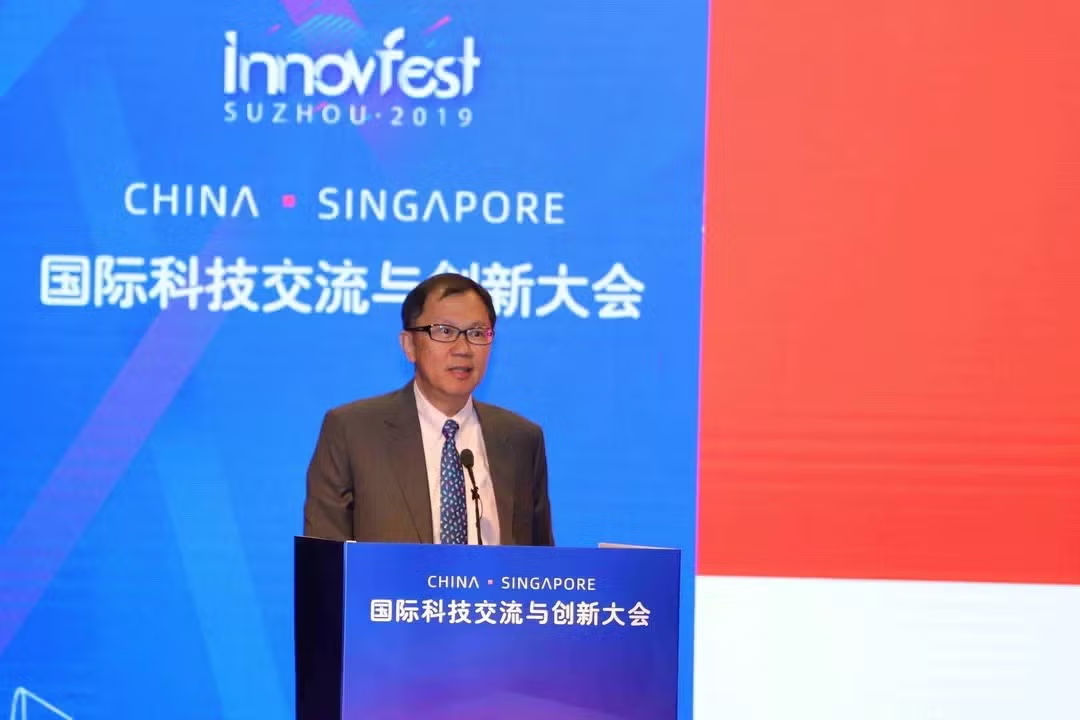
Innovfest Suzhou 2019
Suzhou, 25 September 2019
InnovFest China (Chongqing) 2026 concluded successfully on 12 May 2026, bringing together more than 500 local and international leaders from academia, industry, and government, as well as investors, to accelerate research translation from laboratories into markets.
Hosted by the NUS (Chongqing) Research Institute (NUSRI Chongqing), the event focused on three areas aligned with Chongqing’s industrial priorities: smart mobility, biomedical and health technologies, and advanced materials and manufacturing. It also supported Chongqing’s “33618” development strategy — a modern manufacturing cluster system built around three trillion-yuan leading industry clusters, three 500-billion-yuan pillar clusters, six 100-billion-yuan specialised clusters, and 18 emerging industry clusters.
Building a bridge for applied innovation
In his opening address, NUS President Professor Tan Eng Chye highlighted Singapore’s sustained investment in research, innovation, and enterprise. Under the nation’s RIE2030 plan, around S$37 billion has been committed over five years to support scientific discovery, enterprise growth, and technology translation across four domains: smart nation and digital economy; manufacturing, trade, and connectivity; human health and potential; and urban solutions and sustainability.
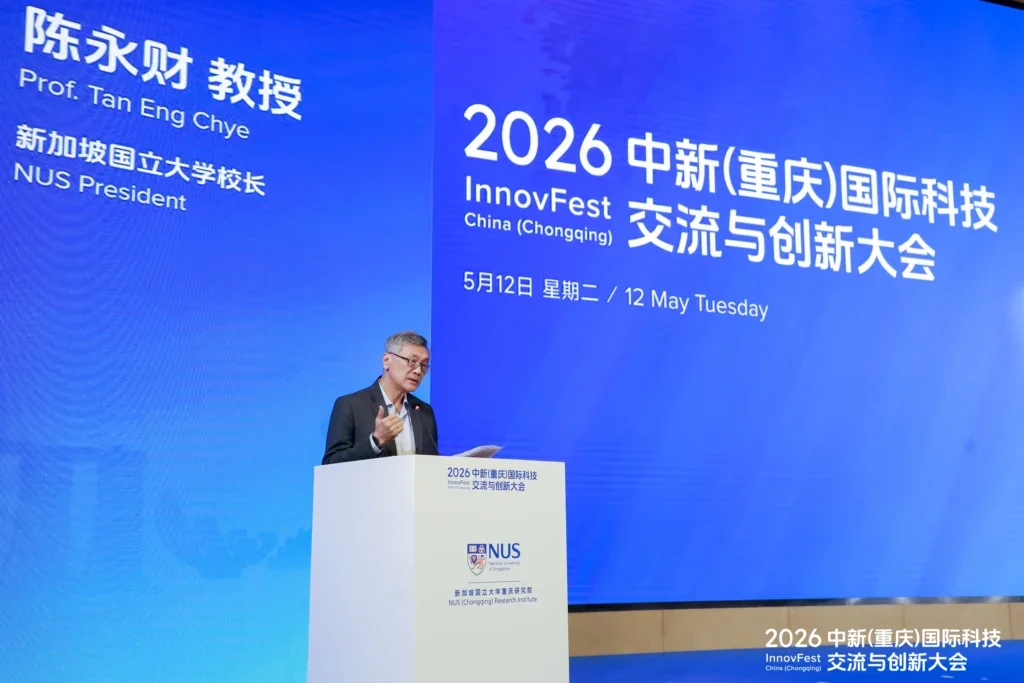
NUS President Professor Tan Eng Chye highlighted NUSRI Chongqing’s role in connecting talent, technology, and capital across Singapore and China.
Beyond advancing scientific progress, President Tan noted that Singapore’s research agenda is increasingly focused on creating economic value, addressing challenges such as ageing populations and sustainability, and strengthening collaboration among universities, industry and government. This shift, he said, reflects a move from pursuing research excellence alone towards more purposeful, outcome-oriented research.
He added that the three focus of InnovFest China (Chongqing) 2026, namely smart mobility, biomedical and health technologies, and advanced materials and manufacturing, carry both strategic significance and strong application potential for Chongqing, China and the wider global economy.
Against this backdrop, President Tan underscored the role of NUSRI Chongqing as an important bridge between Singapore’s research ecosystem and Chongqing’s industrial base. Over the past six years, the institute has collaborated with many Chinese universities and companies, supporting research sharing, technology development and industry-research partnerships. By connecting talent, technology and capital, NUSRI Chongqing continues to help promising research outcomes find practical applications in Chongqing and support deeper collaboration between Singapore and China.
“I encourage all of us — NUS alumni, academics, industry leaders and policymakers to work hand in hand to turn vision into reality, and ambition into achievement. Together, we will build a world where innovation serves the common good of humanity,” President Tan shared.
From agreements to application
A highlight of the opening ceremony was the signing and launch of 12 projects. These included two major cooperation projects, six science and technology innovation projects, and four medical-engineering translation projects.
The medical-engineering projects will be led by the Biomaterials Research and Innovation Centre at NUSRI Chongqing, in partnership with institutions including Peking University People’s Hospital, Shanghai Sixth People’s Hospital, Chongqing Daping Hospital and Tianjin Hospital. Focusing on regenerative orthopaedic materials, the projects will cover patent translation, joint research and development, as well as international multi-centre clinical studies, all of which aim to shorten the pathway from advanced medical research to clinical use.
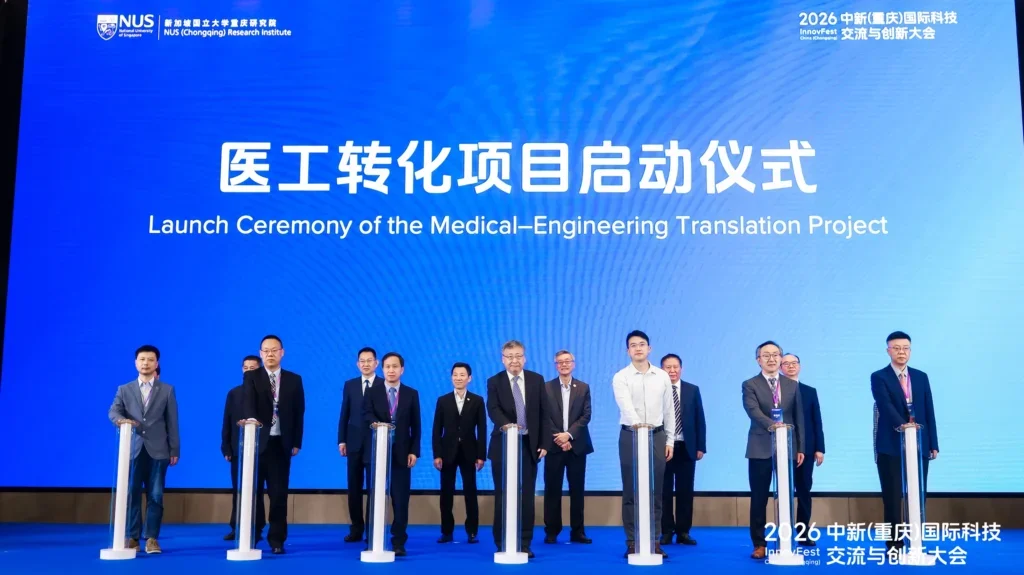
Four medical-engineering translation projects were launched at InnovFest China (Chongqing) 2026 to advance regenerative orthopaedic materials from research and patents towards clinical application.
In their keynote speeches, a diverse line-up of academicians, industry leaders and technology entrepreneurs shared perspectives on university-industry collaboration, hard-tech entrepreneurship, cross-border innovation in intelligent equipment, technology commercialisation and science-based investment.
Sector dialogues with regional reach
Across the day, four parallel sessions were held on smart mobility, biomedical and health technologies, advanced materials and manufacturing, and China (Chongqing)–Singapore Belt and Road technology cooperation, with more than 110 companies and institutions from Singapore and China taking part in discussions. Participants included researchers from the NUS College of Design and Engineering, NUS Business School, Chongqing University, Southwest University, as well as industry representatives from major enterprises such as Changan Automobile, ST Engineering, Shanghai Technology Exchange and more.
A dedicated technology showcase gave participants the opportunity to share research outcomes and industrial projects. In particular, more than 90% of the showcased projects came from the NUSRI Chongqing ecosystem and its Singapore partners, spanning areas such as advanced materials, artificial intelligence and biomedicine.
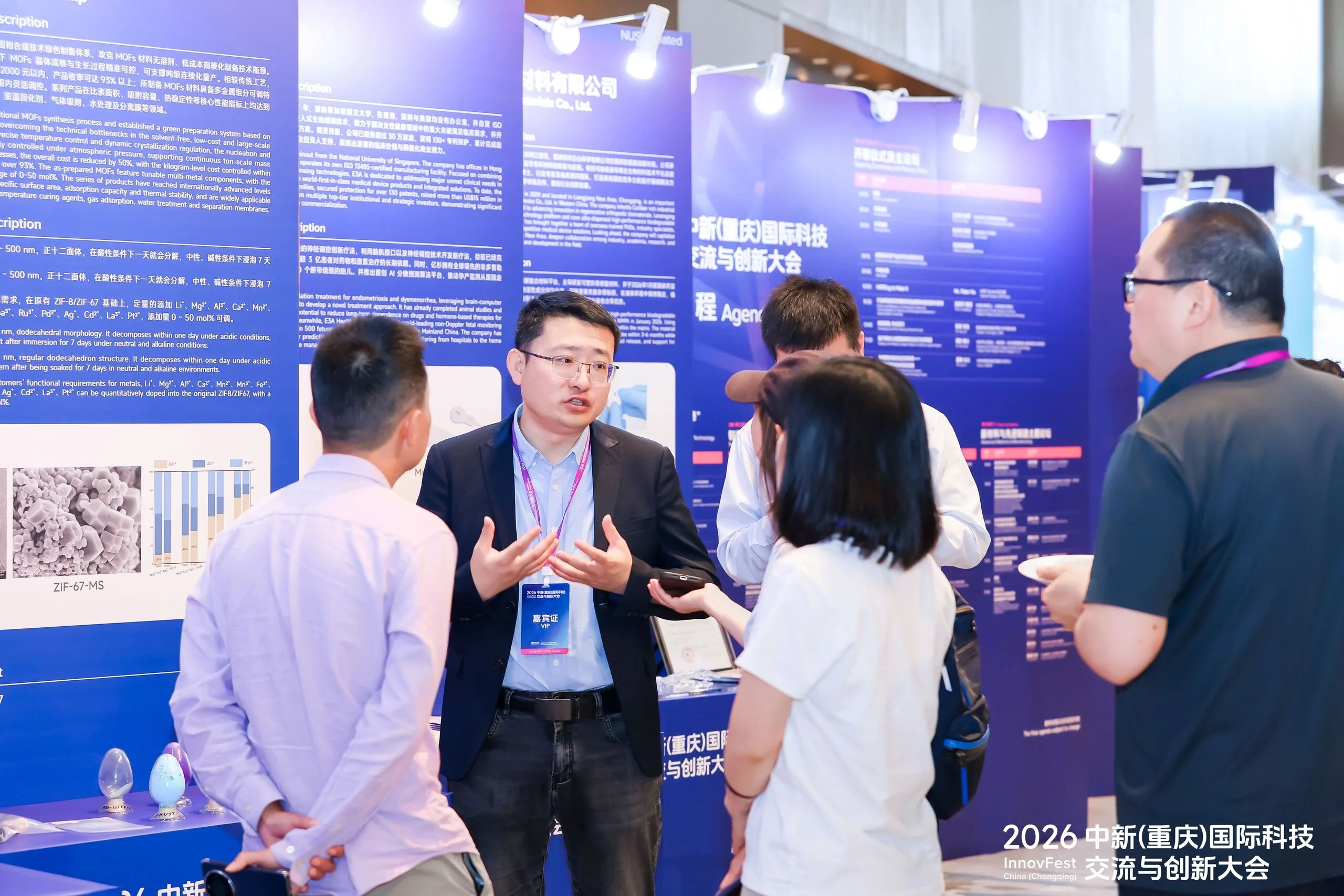
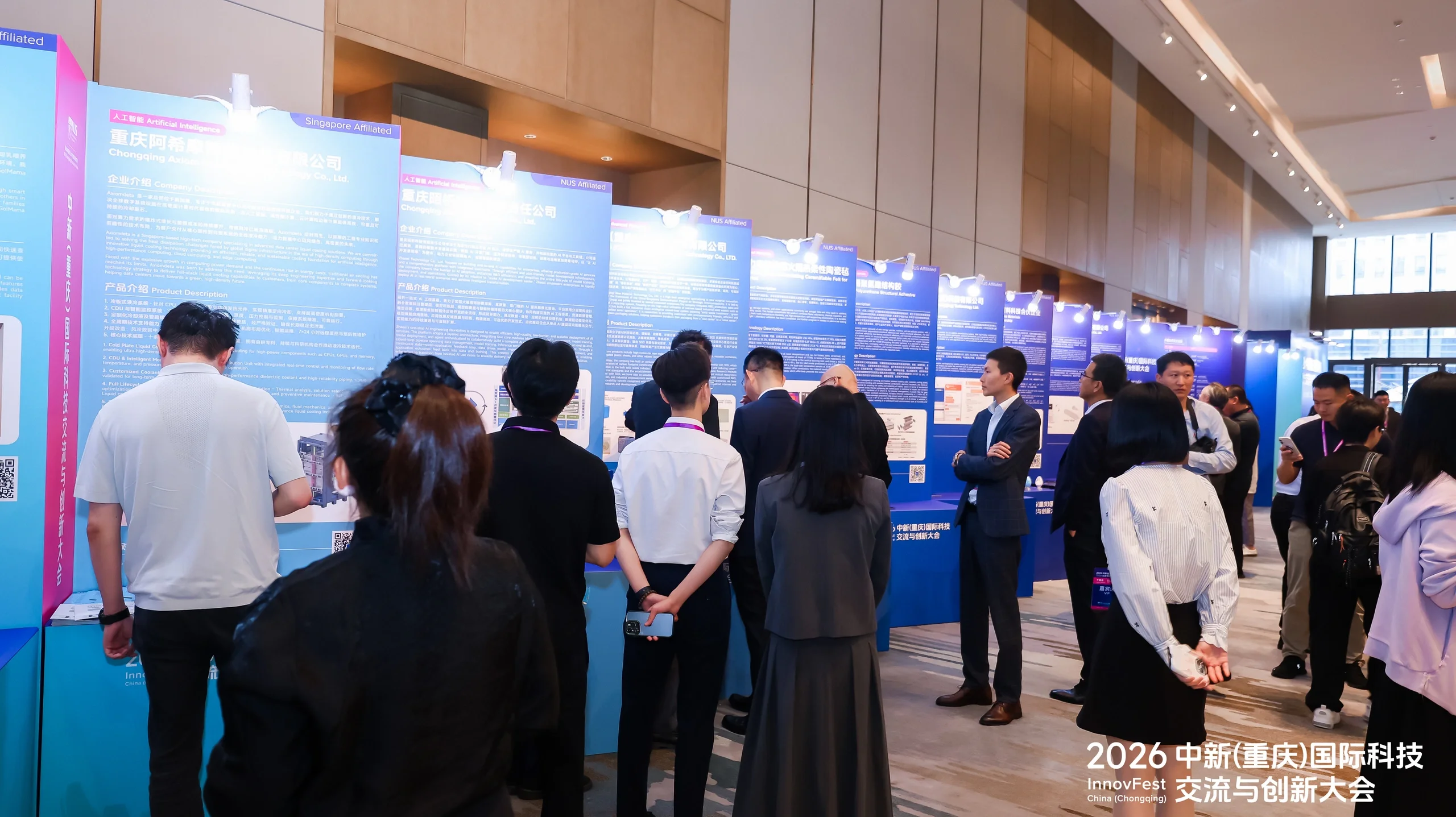
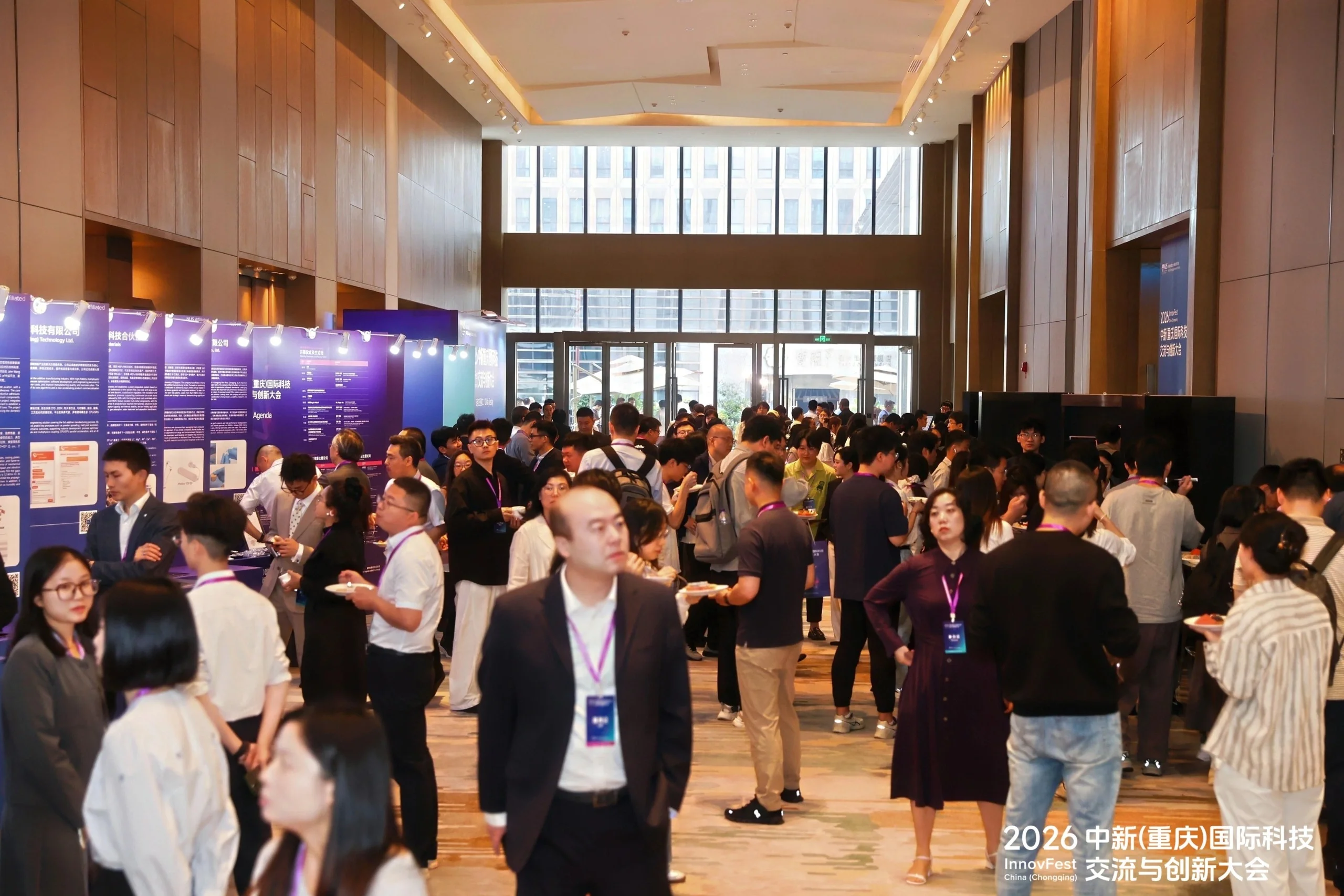
As the China-Singapore (Chongqing) Demonstration Initiative on Strategic Connectivity enters its next “golden decade”, InnovFest China (Chongqing) 2026 underscored how sustained collaboration across academia, industry and research can turn scientific ideas into practical technologies, stronger partnerships and new avenues for growth.